
When a manufacturing partner announces that it is expanding, adding production lines, purchasing new machinery, increasing warehouse space, or opening another facility, the news can sound immediately positive.
Expansion often indicates that a factory is receiving more business and preparing for higher production volumes. For importers, this can create opportunities for increased capacity, shorter lead times, improved technology, and future scalability.
However, factory expansion can also introduce temporary risks. New workers need training, machines require calibration, production processes may change, and quality systems must keep pace with increased output.
For buyers, the important question is not simply “Is our factory getting bigger?” It is “Will this expansion make our supply chain stronger or create new risks?”
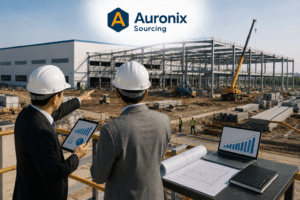
Why Do Factories Expand?
Factories usually expand when their existing operations can no longer comfortably support expected demand or when management sees an opportunity to enter new markets.
Expansion may involve:
- Additional production lines
- New machinery
- Larger warehouses
- Additional workers
- New assembly areas
- Automated equipment
- Expanded quality-control facilities
- Additional factories
- Increased packaging capacity
Each type of expansion can affect customers differently.
Understanding exactly what is changing helps importers determine whether the expansion is relevant to their products.
1. Expansion Can Increase Production Capacity
The most obvious benefit is additional manufacturing capacity.
Suppose a factory currently produces 200,000 units per month and operates close to full utilization. Your orders may need to wait several weeks for an available production slot.
After adding new machinery, capacity might increase significantly.
For customers, this could mean:
More Capacity → Better Scheduling → Faster Production → Greater Scalability
However, theoretical capacity and available capacity are different.
If new customer demand grows just as quickly as factory capacity, the additional equipment may not automatically shorten your lead time.
Ask how much of the expanded capacity will actually be available for your product category.
2. Your Business May Be Able to Scale Faster
A factory that comfortably handles 2,000-unit orders today may struggle when your business requires 20,000 units.
Expansion can remove this limitation.
For growing ecommerce and private-label brands, supplier scalability is extremely important.
Ideally, you want a manufacturing partner capable of supporting:
Trial Order → Repeat Orders → Larger Batches → High-Volume Production
If your supplier expands ahead of your growth, you may avoid the disruption of moving production to another manufacturer later.
3. New Machinery Can Improve Production Efficiency
Factory expansion does not always mean building another facility.
Sometimes manufacturers invest in better equipment.
New machinery may provide benefits such as:
- Faster cycle times
- Greater automation
- Improved repeatability
- Higher production volume
- Better process control
For certain products, this can eventually improve manufacturing economics.
However, importers should not assume that new machinery automatically means better products.
Equipment must be properly installed, configured, maintained, and operated.
The complete system still matters:
Machine + Tooling + Operator + Process Control + Quality Inspection
4. Expansion Can Temporarily Affect Quality
This is one of the most important risks.
When factories expand quickly, they often recruit new employees.
Those workers may initially have less experience with:
- Product specifications
- Assembly procedures
- Defect standards
- Testing requirements
- Packaging instructions
If training and supervision are insufficient, defect rates may temporarily increase.
Compare quality data before and after expansion.
For example:
| Period | Defect Rate |
|---|---|
| Before Expansion | 1.5% |
| Expansion Month 1 | 2.4% |
| Expansion Month 2 | 3.1% |
| Expansion Month 3 | 1.8% |
A temporary increase followed by improvement may indicate the factory is stabilizing its new operations.
A continuously increasing defect rate requires investigation.
5. Your Production Line May Change
Ask whether your product will continue being manufactured on the same production line.
Factories sometimes redistribute products after expansion.
Your order might move to:
New Machine → New Line → New Workers → New Supervisor
Even when specifications remain unchanged, changing the production environment can create variation.
For important products, consider whether additional first-production checks or inspections are appropriate after a major process transfer.
6. New Facilities Need Validation
If production is transferred to a newly opened factory, do not assume it will perform identically to the original facility.
The new site may have different:
- Equipment
- Workers
- Management
- Quality systems
- Material storage
- Subcontractors
- Production processes
For critical products, evaluate the new manufacturing location appropriately.
The supplier relationship may be unchanged commercially, but the production environment may be substantially different.
7. Expansion Can Improve Lead Times
One major reason factories expand is to reduce production bottlenecks.
Before expansion, an order may wait two weeks before entering production because every machine is occupied.
Additional capacity can reduce this queue.
But verify actual performance.
Track:
Promised Lead Time → Actual Lead Time
across several orders before and after expansion.
If delivery performance improves consistently, the investment is creating practical benefits for your business.
8. Warehouse Expansion Can Improve Inventory Management
Factories do not expand only production areas.
Larger warehouse facilities may improve the handling of:
- Raw materials
- Components
- Work-in-progress goods
- Packaging
- Finished products
Better warehouse organization can reduce material mixing and handling problems.
For products requiring specific storage conditions, however, warehouse size alone is not enough.
Storage controls remain more important than square meters.
9. Expansion Can Reduce Outsourcing
A factory may previously have outsourced certain processes because it lacked equipment.
Expansion may allow those processes to move in-house.
For example:
Previously: Production → External Processing → Factory → Assembly
After Expansion: Production → Internal Processing → Assembly
Bringing important processes in-house can potentially improve scheduling and process visibility.
Ask which operations have changed and how the new processes are controlled.
10. Expansion Can Also Create New Subcontracting
The opposite can happen.
A rapidly growing factory may receive orders faster than it can expand.
While new facilities are being prepared, management may temporarily outsource production to maintain delivery schedules.
This deserves attention.
Ask whether expansion has changed:
- Component suppliers
- Subcontractors
- Production locations
- Materials
- Assembly processes
Important changes should not occur without appropriate communication and control.
11. Expansion May Change Your Importance to the Factory
This is an often-overlooked issue.
Imagine your annual purchases represent 10% of a smaller factory’s business.
After major expansion, the supplier attracts several large international customers.
Your purchasing volume may eventually represent only 1% of its business.
The factory has become stronger, but your commercial importance has decreased.
Monitor whether this affects:
Communication + Production Priority + Flexibility + Negotiation
A growing supplier should still provide service appropriate to your business.
12. Expansion Can Create Negotiation Opportunities
If your order volumes are also increasing, factory expansion can create an appropriate time to review commercial arrangements.
Discuss whether increased production efficiency or larger purchasing volumes affect:
- Unit pricing
- MOQ
- Lead times
- Production capacity
- Packaging arrangements
- Forecasting
- Payment terms
Do not assume expansion automatically means prices should decrease.
The factory may have invested significant capital in new equipment and infrastructure.
Use actual purchasing volume and production economics to support negotiations.
13. Watch Whether Quality Systems Scale Too
Factories sometimes expand production faster than their quality department.
Imagine production capacity increases by 50%, but the number of quality inspectors remains unchanged.
The QC team may now be responsible for significantly more output.
Ask whether expansion also includes:
QC Staff + Testing Equipment + Inspection Stations + Process Controls
Manufacturing capacity and quality-control capacity should grow together.
14. Check Whether Suppliers Can Support the Expansion
Your factory depends on upstream suppliers.
If production doubles, raw-material and component requirements may also increase significantly.
Can existing suppliers handle the additional volume?
Rapid expansion can sometimes create:
- Material shortages
- New component suppliers
- Longer procurement lead times
- Supplier substitutions
For products containing critical materials or components, monitor upstream changes carefully.
15. Use Expansion as a Reason to Review Your Supplier
Factory expansion is a useful trigger for a supplier-performance review.
Evaluate:
Capacity → Quality → Lead Time → Communication → Materials → Processes → Subcontracting → Scalability
Compare performance before and after the change.
This allows you to determine whether expansion is genuinely improving the manufacturing relationship.
Warning Signs During Factory Expansion
Expansion deserves additional attention when you observe several problems simultaneously.
Potential warning signs include:
- Increasing defect rates
- Frequent new workers on your production line
- Repeated delivery delays
- Unapproved process changes
- Unknown subcontractors
- Material substitutions
- Poor communication
- Inconsistent samples and bulk production
These do not automatically mean the expansion will fail.
They indicate that additional verification and quality control may be necessary.
How Auronix Approaches Factory Expansion
Auronix Sourcing evaluates supplier growth from the perspective of the importer’s supply chain.
Depending on the project, this can involve supplier verification, factory capability assessment, production monitoring, sample management, quality inspection, specification control, packaging verification, and supplier performance tracking.
When a manufacturing partner expands, the objective is to determine whether additional capacity is being introduced without weakening the processes that made the supplier reliable in the first place.
For growing brands, a successfully expanding factory can become a valuable long-term partner. But expansion should be verified through actual production performance rather than assumed from announcements or factory size.
Conclusion
Factory expansion can be excellent news for your business.
It may provide:
Higher Capacity + Better Equipment + Shorter Lead Times + Greater Scalability + Improved Production Efficiency
But growth also introduces change.
New machinery, workers, production lines, suppliers, subcontractors, and facilities can temporarily increase manufacturing risk.
When your supplier expands, ask what exactly is changing and whether your product will be affected. Monitor defect rates, first-pass inspection performance, actual lead times, material consistency, and production processes across the first orders following significant changes.
Most importantly, determine whether the factory’s quality-management systems are expanding at the same speed as its production capacity.
A bigger factory is valuable only when it becomes a better and more capable manufacturing partner.
For importers, successful factory expansion should ultimately mean more than additional floor space. It should provide the capacity, consistency, quality control, and scalability required to support the next stage of your business growth.