
Product labeling is a critical part of preparing goods for international markets. A well-designed label does more than identify a product—it provides important information to customers, helps businesses comply with regulations, supports inventory management, and ensures products move smoothly through customs, warehouses, and retail channels.
Whether you’re an Amazon FBA seller, Shopify store owner, wholesaler, retailer, distributor, or private label brand, understanding product labeling requirements is essential before importing or exporting products.
At Auronix Sourcing, we help businesses prepare export-ready products by coordinating supplier verification, packaging development, labeling, quality inspections, and international shipping. Our team ensures products are properly labeled before they leave the factory.
This guide explains the essential product labeling requirements and best practices for businesses sourcing products from China.
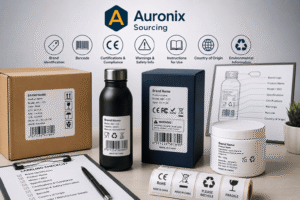
Why Product Labeling Matters
Proper product labeling helps businesses:
- Identify products accurately
- Meet regulatory requirements
- Improve customer trust
- Support inventory management
- Simplify customs clearance
- Reduce shipping errors
- Improve warehouse efficiency
Incorrect or missing labels can result in shipment delays, marketplace rejections, or customer complaints.
Essential Information on Product Labels
While labeling requirements vary by product type and destination country, most products should clearly display:
- Product name
- Brand name
- Product model or SKU
- Product description
- Country of origin
- Manufacturer or importer information (when required)
- Barcode
- Batch or lot number (if applicable)
- Manufacturing date (if applicable)
- Expiration date (for applicable products)
Always verify the requirements for your destination market before production.
Include Accurate Branding
Your label should reflect your brand consistently.
Include:
- Company logo
- Brand colors
- Brand name
- Consistent typography
Professional branding improves product recognition and builds customer confidence.
Product Safety Information
Certain products require additional safety information.
Examples include:
- Warning labels
- Safety instructions
- Age recommendations
- Hazard symbols
- Usage precautions
Include only the safety information applicable to your product and destination market.
Country of Origin
Many countries require products to display their country of origin.
For products manufactured in China, labels commonly include:
Made in China
The wording and placement may vary depending on your product category and the regulations of the importing country.
Barcode Requirements
Most retail products require a scannable barcode.
Depending on your sales channel, this may include:
- UPC barcode
- EAN barcode
- FNSKU label (for Amazon FBA)
- Internal warehouse barcode
Each product variation should have its own unique barcode.
Packaging Labels
In addition to the product label, packaging may require:
- Carton labels
- Shipping labels
- Handling instructions
- Carton numbers
- Quantity markings
Proper packaging labels help warehouses and logistics providers process shipments efficiently.
Multi-Language Labels
If you sell products internationally, labels may need to include multiple languages.
Common information translated may include:
- Product name
- Instructions for use
- Safety warnings
- Ingredients or materials (where applicable)
- Storage instructions
Confirm language requirements before printing packaging.
Material and Print Quality
Labels should be durable enough for transportation and storage.
Choose materials that:
- Resist moisture
- Resist fading
- Remain securely attached
- Maintain clear print quality
- Withstand normal handling
High-quality printing ensures barcodes and important information remain readable.
Product-Specific Labeling
Different products may require additional information.
Examples include:
Food Products
- Ingredients
- Nutritional information
- Allergens
- Best-before or expiration dates
Cosmetics
- Ingredients
- Directions for use
- Batch number
- Shelf life
Electronics
- Model number
- Voltage information
- Safety certifications
- Serial number
Children’s Products
- Age recommendations
- Safety warnings
- Compliance markings (where required)
Always verify the labeling regulations that apply to your specific product category.
Amazon FBA Labeling
Products shipped to Amazon fulfillment centers often require additional labels.
These may include:
- Amazon FNSKU labels
- Carton labels
- Shipment identification labels
Ensure products meet Amazon’s current packaging and labeling requirements before shipment.
Verify Labels Before Shipment
Before products leave the factory:
- Check spelling and grammar.
- Verify barcode readability.
- Confirm logo placement.
- Review print quality.
- Confirm product information.
- Ensure labels match approved artwork.
Final label verification helps avoid costly corrections after shipment.
Common Product Labeling Mistakes
Businesses often experience issues because they:
- Miss required product information
- Use poor-quality printing
- Print incorrect barcodes
- Skip proofreading
- Use inconsistent branding
- Forget marketplace-specific labeling requirements
- Fail to inspect labels before shipment
Avoiding these mistakes helps products move smoothly through the supply chain.
Why Work with Auronix Sourcing?
Preparing products for international markets requires accurate labeling, careful quality control, and close coordination with manufacturers.
At Auronix Sourcing, we help businesses ensure every product is correctly labeled before it leaves China.
Our services include:
- Product sourcing
- Supplier verification
- Factory audits
- Product labeling coordination
- Barcode verification
- Packaging development
- Private label manufacturing
- Sample management
- Production monitoring
- Quality inspections
- Packaging verification
- Freight coordination
- Air freight
- Sea freight
- Door-to-door logistics
Our experienced sourcing team works directly with verified manufacturers to ensure products meet customer requirements, maintain professional branding, and are ready for international distribution.
Best Practices for Product Labeling
To improve compliance and efficiency:
- Verify destination country requirements.
- Use clear and accurate product information.
- Maintain consistent branding.
- Print high-quality, durable labels.
- Assign unique barcodes to each product variation.
- Review artwork carefully before production.
- Conduct final label inspections before shipment.
- Keep digital records of approved label designs.
Following these practices helps reduce delays, improve customer satisfaction, and support efficient supply chain management.
Conclusion
Product labeling is an essential part of international trade and brand development. Accurate, professional labels help customers identify products, support regulatory compliance, improve inventory management, and strengthen brand recognition. Investing time in proper labeling can prevent costly delays and create a better customer experience.
By understanding destination market requirements, using durable materials, verifying label accuracy, and working with experienced sourcing professionals, businesses can confidently prepare products for global markets.
With Auronix Sourcing as your trusted sourcing partner, you receive complete support in product sourcing, supplier verification, factory audits, product labeling, packaging solutions, quality inspections, and international shipping—helping your business export professionally labeled products from China safely, efficiently, and with confidence.