
Original Design Manufacturing (ODM) is an ideal solution for businesses that want to launch branded products quickly without developing a product entirely from scratch. Instead of designing a new product, businesses can select an existing product created by a manufacturer and customize it with their own branding, packaging, colors, and selected features.
China is one of the world’s leading destinations for ODM manufacturing due to its advanced production capabilities, extensive supplier network, and competitive manufacturing costs. Whether you’re an Amazon FBA seller, Shopify store owner, wholesaler, retailer, distributor, or private label brand, understanding the ODM product development process can help you launch products faster while minimizing development costs.
At Auronix Sourcing, we help businesses identify reliable ODM manufacturers, customize products, verify suppliers, monitor production, conduct quality inspections, and manage worldwide shipping.
This guide explains the complete ODM product development process from product selection to final delivery.
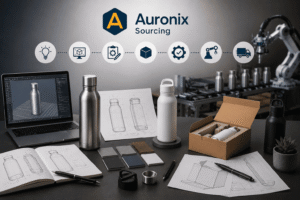
What Is ODM Manufacturing?
ODM (Original Design Manufacturing) is a manufacturing model in which a factory designs and develops a product, allowing buyers to customize and sell it under their own brand.
Unlike OEM manufacturing, where the buyer provides the product design, ODM manufacturers already have finished product designs available for customization.
Businesses can typically customize:
- Brand name
- Company logo
- Product colors
- Packaging
- Labels
- Instruction manuals
- Accessories
- Selected product features
ODM is an excellent option for businesses looking to enter the market quickly while maintaining a professional brand identity.
Benefits of ODM Manufacturing
ODM offers several advantages for growing businesses.
These include:
- Faster product development
- Lower development costs
- Reduced design risks
- Proven product designs
- Faster time to market
- Branding opportunities
- Lower technical complexity
ODM is especially suitable for startups and businesses launching new product lines.
Step 1: Choose an Existing Product
The first step is selecting an existing product that matches your target market.
Consider:
- Customer demand
- Product quality
- Competition
- Profit margins
- Shipping costs
- Customization potential
Choose products that align with your business goals and branding strategy.
Step 2: Research the Market
Before selecting a product, analyze the market carefully.
Research:
- Competitor products
- Customer reviews
- Industry trends
- Product pricing
- Popular features
- Customer expectations
This research helps identify opportunities to improve or differentiate existing products.
Step 3: Find Experienced ODM Manufacturers
Look for manufacturers that specialize in ODM production within your product category.
Evaluate suppliers based on:
- Manufacturing experience
- ODM capabilities
- Product specialization
- Production capacity
- Export experience
- Communication quality
Experienced manufacturers often provide greater flexibility and higher production standards.
Step 4: Verify the Manufacturer
Before placing an order, verify the supplier’s credentials.
Review:
- Business registration
- Factory location
- Manufacturing capabilities
- Production equipment
- Export history
- Quality management systems
Supplier verification helps reduce sourcing risks and ensures you’re working with a legitimate manufacturer.
Step 5: Select Customization Options
Although the core product already exists, many elements can still be customized.
Common customization options include:
Branding
- Company logo
- Brand name
- Product labels
Packaging
- Retail boxes
- Gift packaging
- Product inserts
- Barcodes
- QR codes
Product Appearance
- Colors
- Surface finishes
- Materials (where available)
- Accessories
Documentation
- User manuals
- Warranty cards
- Instruction guides
These customizations help create a unique product that reflects your brand identity.
Step 6: Request Product Samples
Before approving production, request customized samples.
Inspect:
- Product quality
- Logo placement
- Packaging
- Materials
- Colors
- Functionality
- Workmanship
Reviewing samples ensures the customized product meets your expectations.
Step 7: Finalize Specifications
Once the sample is approved, confirm every production detail.
Document:
- Product specifications
- Branding
- Packaging
- Labeling
- Quantity
- Quality requirements
- Production timeline
Written approval minimizes production misunderstandings.
Step 8: Negotiate Commercial Terms
Discuss important business terms before manufacturing begins.
Negotiate:
- Unit pricing
- Minimum Order Quantity (MOQ)
- Production lead time
- Payment terms
- Packaging costs
- Shipping terms
Strong negotiations help establish a long-term partnership with the manufacturer.
Step 9: Begin Mass Production
Once all specifications are approved, manufacturing begins.
Production generally includes:
- Material preparation
- Product manufacturing
- Branding
- Packaging
- Final assembly
- Shipment preparation
Regular communication helps keep production on schedule.
Step 10: Monitor Production
Production monitoring helps ensure the factory follows the approved specifications.
Monitor:
- Production progress
- Manufacturing schedule
- Branding implementation
- Packaging preparation
- Completion timeline
Early issue detection reduces costly delays.
Step 11: Conduct Quality Inspections
Arrange a professional pre-shipment inspection before products leave the factory.
Inspectors verify:
- Product quality
- Quantity
- Packaging
- Branding accuracy
- Labeling
- Functionality
- Workmanship
Quality inspections help ensure consistency across the production batch.
Step 12: Arrange International Shipping
After production is complete, select the shipping option that best suits your business.
Air Freight
Ideal for:
- Small shipments
- Urgent orders
- High-value products
Sea Freight
Ideal for:
- Bulk shipments
- Lower shipping costs
- Large inventory
Door-to-Door (DDP) Shipping
Suitable for businesses looking for a convenient shipping solution with customs clearance and logistics handled by the shipping provider.
Common ODM Product Development Mistakes
Businesses often encounter problems because they:
- Skip supplier verification
- Fail to review customized samples
- Choose products based only on price
- Ignore branding consistency
- Skip quality inspections
- Fail to document customization requirements
- Overlook production monitoring
Avoiding these mistakes helps ensure a successful product launch.
ODM vs OEM: What’s the Difference?
| Feature | ODM | OEM |
|---|---|---|
| Product design | Created by the manufacturer | Created by the buyer |
| Development time | Faster | Longer |
| Development cost | Lower | Higher |
| Customization level | Moderate | Extensive |
| Best for | Faster product launches | Fully customized products |
| Technical involvement | Lower | Higher |
ODM is ideal for businesses that want to enter the market quickly, while OEM is better suited for brands seeking complete product uniqueness.
Why Work with Auronix Sourcing?
Launching an ODM product requires choosing the right manufacturer, managing customization, and maintaining strict quality control.
At Auronix Sourcing, we simplify the entire ODM development process from supplier selection to final delivery.
Our services include:
- Product sourcing
- ODM manufacturer selection
- Supplier verification
- Factory audits
- Supplier comparison
- Price negotiation
- Product customization
- Private label manufacturing
- Sample management
- Production monitoring
- Quality inspections
- Packaging verification
- Freight coordination
- Air freight
- Sea freight
- Door-to-door logistics
Our experienced sourcing team works directly with verified Chinese manufacturers to help businesses launch high-quality branded products quickly while reducing sourcing risks and ensuring reliable production.
Best Practices for Successful ODM Projects
To maximize success:
- Choose manufacturers with proven ODM experience.
- Verify every supplier before ordering.
- Compare multiple manufacturers.
- Review customized samples carefully.
- Confirm all specifications in writing.
- Monitor production regularly.
- Conduct pre-shipment inspections.
- Build long-term supplier relationships.
Following these best practices helps businesses launch reliable, high-quality products while minimizing risk.
Conclusion
ODM manufacturing provides businesses with a fast, cost-effective way to launch branded products without investing in complete product design and development. By customizing proven products with your own branding, packaging, and selected features, you can reduce development time while building a recognizable brand.
Success depends on selecting experienced manufacturers, verifying suppliers, reviewing samples, monitoring production, and maintaining strict quality control throughout the process. With the right sourcing strategy and professional support, ODM manufacturing can help businesses expand their product offerings and grow more efficiently.
With Auronix Sourcing as your trusted sourcing partner, you receive complete support in ODM product development, supplier verification, factory audits, product customization, private label manufacturing, quality inspections, packaging solutions, and international shipping—helping your business launch high-quality branded products from China quickly, safely, and with confidence.