
Private label products have become one of the fastest-growing business models for eCommerce entrepreneurs, wholesalers, retailers, and brand owners. Instead of selling generic products, private labeling allows you to create products under your own brand, helping you build customer loyalty, increase profit margins, and stand out in competitive markets.
China remains one of the world’s leading destinations for private label manufacturing thanks to its extensive supplier network, advanced production capabilities, and competitive pricing. However, creating a successful private label product requires much more than simply adding a logo—it involves product research, supplier selection, quality control, branding, and reliable logistics.
At Auronix Sourcing, we help businesses develop and manufacture private label products by connecting them with verified Chinese manufacturers, managing production, conducting quality inspections, and coordinating worldwide shipping.
This guide explains the complete process of creating your own private label product.
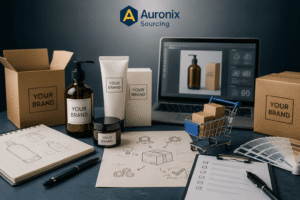
What Is a Private Label Product?
A private label product is manufactured by a supplier but sold under your own brand name.
Instead of promoting the manufacturer’s brand, you control:
- Brand identity
- Logo
- Packaging
- Product design
- Marketing
- Customer experience
Private labeling allows businesses to build long-term brand value rather than competing solely on price.
Benefits of Private Labeling
Launching a private label product offers several advantages, including:
- Stronger brand recognition
- Higher profit potential
- Greater customer loyalty
- Product differentiation
- Custom packaging
- Exclusive branding
- Better long-term business value
These benefits make private labeling a popular strategy for growing businesses.
Step 1: Choose the Right Product
The first step is selecting a product with strong market potential.
Consider:
- Customer demand
- Competition
- Profit margins
- Shipping costs
- Product size and weight
- Opportunities for improvement
Choose a product that aligns with your target market and business goals.
Step 2: Research Your Market
Understand your customers before investing in production.
Research:
- Competitor products
- Customer reviews
- Market trends
- Pricing
- Product features
- Common complaints
Customer feedback often reveals opportunities to improve existing products.
Step 3: Develop Your Brand
A successful private label business starts with a strong brand.
Create:
- Brand name
- Logo
- Brand colors
- Brand message
- Packaging style
- Product positioning
A professional brand builds trust and helps your products stand out.
Step 4: Prepare Product Specifications
Provide manufacturers with detailed product requirements.
Include:
- Materials
- Dimensions
- Colors
- Features
- Logo placement
- Packaging design
- Labeling requirements
- Quantity
Clear specifications reduce production errors.
Step 5: Find Reliable Manufacturers
Search for manufacturers through trusted sources such as:
- Alibaba
- 1688
- Made-in-China
- Global Sources
- Trade fairs
- Professional sourcing agents
Always compare multiple manufacturers before making a final decision.
Step 6: Verify Suppliers
Before placing an order, verify:
- Business registration
- Factory location
- Manufacturing capabilities
- Export experience
- Production capacity
- Product specialization
Supplier verification helps reduce sourcing risks and ensures you work with reliable manufacturers.
Step 7: Request Product Samples
Never skip the sampling stage.
Evaluate:
- Product quality
- Materials
- Functionality
- Packaging
- Logo placement
- Print quality
- Overall finish
Approve samples only after confirming they meet your expectations.
Step 8: Customize Your Product
Private labeling goes beyond adding a logo.
Possible customization options include:
- Product colors
- Materials
- Packaging
- Instruction manuals
- Labels
- Accessories
- Product features
Customization creates a unique identity for your brand.
Step 9: Negotiate Pricing and Terms
Discuss important production details before manufacturing begins.
Negotiate:
- Unit pricing
- Minimum Order Quantity (MOQ)
- Production lead time
- Packaging costs
- Payment terms
- Shipping terms
A balanced agreement supports a long-term partnership with the manufacturer.
Step 10: Monitor Production
Stay updated throughout manufacturing.
Monitor:
- Production progress
- Manufacturing schedule
- Packaging preparation
- Branding implementation
- Estimated completion date
Production monitoring helps identify issues before shipment.
Step 11: Conduct Quality Inspections
Arrange a professional inspection before products leave the factory.
Inspectors verify:
- Product quality
- Quantity
- Packaging
- Labeling
- Branding accuracy
- Workmanship
Quality inspections help ensure your products meet your brand standards.
Step 12: Arrange International Shipping
Choose the shipping method that best suits your business.
Air Freight
Ideal for:
- Smaller shipments
- High-value products
- Urgent inventory
Sea Freight
Ideal for:
- Bulk orders
- Lower shipping costs
- Large inventory
Door-to-Door (DDP) Shipping
A convenient solution for businesses seeking a simplified shipping process with logistics and customs handling managed by the shipping provider.
Step 13: Launch Your Product
Once your products arrive, prepare for launch.
Focus on:
- Product photography
- Marketing materials
- Product listings
- Customer support
- Inventory planning
- Sales strategy
A successful launch helps build momentum and customer trust.
Common Private Label Mistakes to Avoid
Many businesses struggle because they:
- Choose products with little market demand
- Skip supplier verification
- Ignore product samples
- Use poor packaging
- Skip quality inspections
- Focus only on the lowest price
- Neglect branding
Avoiding these mistakes improves your chances of building a successful brand.
Why Work with Auronix Sourcing?
Creating a private label product involves much more than finding a manufacturer.
At Auronix Sourcing, we help businesses manage every stage of private label manufacturing from concept to delivery.
Our services include:
- Product sourcing
- Supplier verification
- Factory audits
- Supplier comparison
- Price negotiation
- Product customization
- Private label manufacturing
- Packaging development
- Sample management
- Production monitoring
- Quality inspections
- Packaging verification
- Freight coordination
- Air freight
- Sea freight
- Door-to-door logistics
Our experienced sourcing team works directly with verified Chinese manufacturers to help businesses launch high-quality private label products while reducing sourcing risks and improving operational efficiency.
Best Practices for Private Label Success
To build a successful private label brand:
- Choose products with strong market demand.
- Develop a professional brand identity.
- Work with verified manufacturers.
- Request and approve product samples.
- Invest in quality packaging.
- Monitor production carefully.
- Conduct pre-shipment inspections.
- Build long-term supplier relationships.
These practices help create products that customers trust and remember.
Conclusion
Creating your own private label product is one of the most effective ways to build a long-term, profitable business. By developing a unique brand, choosing reliable manufacturers, customizing your products, and maintaining strict quality control, you can differentiate yourself in competitive markets and create lasting value for your customers.
Success in private labeling depends on careful planning, supplier verification, professional branding, and consistent product quality. With the right sourcing strategy and experienced support, businesses can confidently bring their ideas to market.
With Auronix Sourcing as your trusted sourcing partner, you receive complete support in product sourcing, supplier verification, factory audits, private label manufacturing, product customization, quality inspections, packaging solutions, and international shipping—helping your business create and launch successful private label products from China with confidence.