
Importing products from China can significantly reduce manufacturing costs and improve profit margins, but many businesses underestimate the hidden expenses involved. While the factory price may seem attractive, additional costs can quickly reduce your profitability if they are not planned for in advance.
Whether you’re an Amazon FBA seller, Shopify store owner, eCommerce brand, wholesaler, retailer, or private label business, understanding the true cost of importing is essential for making informed sourcing decisions.
At Auronix Sourcing, we help businesses manage every stage of the importing process—from supplier verification and factory audits to quality inspections and international shipping—ensuring there are no unexpected surprises along the way.
This guide explains the most common hidden costs when importing from China and how to avoid them.
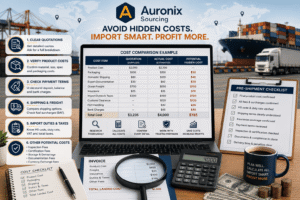
What Are Hidden Import Costs?
Hidden costs are expenses that are not always included in the supplier’s initial quotation.
These may include:
- Shipping charges
- Customs duties
- Import taxes
- Quality inspection fees
- Product sampling costs
- Packaging expenses
- Bank transfer fees
- Storage charges
- Freight insurance
- Product testing or certification (where required)
Understanding these costs helps you calculate the true landed cost of your products.
1. Calculate the Total Landed Cost
Never make purchasing decisions based only on the factory price.
Your total landed cost may include:
- Product cost
- Packaging
- Freight charges
- Customs duties
- Import taxes
- Inspection fees
- Insurance (if applicable)
- Warehousing costs
- Local transportation
Calculating the complete landed cost allows you to price your products accurately and protect your profit margins.
2. Understand Shipping Terms (Incoterms)
Different Incoterms determine which costs are covered by the supplier and which are your responsibility.
Common shipping terms include:
- EXW (Ex Works)
- FOB (Free on Board)
- CIF (Cost, Insurance, and Freight)
- DDP (Delivered Duty Paid)
Before confirming an order, ensure you fully understand what is included in the quoted price.
3. Ask for a Detailed Quotation
A professional supplier should provide a clear and transparent quotation.
Request a breakdown of:
- Product price
- Packaging costs
- Custom branding fees
- Mold or tooling charges (if applicable)
- Sample fees
- Shipping costs
- Payment terms
A detailed quotation helps prevent unexpected charges later.
4. Verify Supplier Pricing
Extremely low prices may indicate hidden costs or compromises in quality.
Compare quotations from multiple suppliers while considering:
- Product quality
- Manufacturing capability
- Packaging
- Lead time
- Communication
- Included services
The lowest quote is not always the best overall value.
5. Request Product Samples
Ordering samples before mass production helps identify potential issues early.
Evaluate:
- Material quality
- Product functionality
- Workmanship
- Packaging
- Branding
Although sample costs may seem like an extra expense, they can help prevent costly production mistakes.
6. Don’t Skip Quality Inspections
Some businesses try to reduce costs by skipping inspections, but this can lead to expensive problems after shipment.
Professional inspections verify:
- Product quality
- Quantity
- Packaging
- Labeling
- Workmanship
- Carton condition
Quality inspections are often far less expensive than replacing defective products.
7. Understand Packaging Costs
Packaging may not always be included in the factory price.
Additional costs may apply for:
- Retail packaging
- Custom boxes
- Logo printing
- Product inserts
- Barcodes
- Instruction manuals
Confirm packaging details before production begins.
8. Consider Payment Fees
International payments may involve additional charges such as:
- Bank transfer fees
- Currency conversion fees
- Payment processing costs
Ask your supplier which payment methods are accepted and whether any transaction fees apply.
9. Plan for Shipping and Storage
Shipping costs fluctuate depending on:
- Shipment size
- Weight
- Shipping method
- Destination
- Seasonal demand
You may also incur storage costs if products remain at warehouses or fulfillment centers for extended periods.
Planning logistics in advance helps reduce unnecessary expenses.
10. Work with Verified Suppliers
Reliable manufacturers are generally more transparent about pricing and production requirements.
Before placing an order, verify:
- Business registration
- Factory location
- Manufacturing capabilities
- Export experience
- Production capacity
Verified suppliers are less likely to introduce unexpected issues during production.
Common Hidden Costs Importers Often Overlook
Many first-time importers forget to budget for:
- Sample production
- Product customization
- Packaging upgrades
- Inspection services
- Freight insurance
- Customs duties
- Import taxes
- Bank charges
- Warehouse storage
- Domestic transportation
Including these costs in your budget helps avoid unpleasant surprises.
Why Work with Auronix Sourcing?
Unexpected costs often arise because businesses lack visibility into the sourcing process.
At Auronix Sourcing, we help businesses plan accurately and reduce unnecessary expenses by providing transparent sourcing support from start to finish.
Our services include:
- Product sourcing
- Supplier verification
- Factory audits
- Supplier comparison
- Price negotiation
- Product customization
- Private label manufacturing
- Sample management
- Production monitoring
- Quality inspections
- Packaging verification
- Freight coordination
- Air freight
- Sea freight
- Door-to-door logistics
Our experienced sourcing team works closely with verified manufacturers to help businesses understand their total importing costs while reducing sourcing risks.
Best Practices for Controlling Import Costs
To avoid hidden expenses:
- Calculate total landed costs before ordering.
- Request detailed supplier quotations.
- Compare multiple suppliers.
- Verify every manufacturer.
- Approve product samples.
- Conduct quality inspections before shipment.
- Understand your shipping terms.
- Plan logistics and customs requirements in advance.
These practices help businesses manage budgets more effectively and improve profitability.
Conclusion
Hidden costs are one of the biggest challenges faced by importers, especially those sourcing products for the first time. While the factory price is an important factor, successful importing requires a complete understanding of shipping charges, customs duties, packaging, inspections, payment fees, and other expenses that contribute to the total landed cost.
By planning carefully, requesting transparent quotations, working with verified suppliers, and conducting quality inspections, businesses can avoid costly surprises and build a more profitable import operation.
With Auronix Sourcing as your trusted sourcing partner, you receive complete support in product sourcing, supplier verification, factory audits, private label manufacturing, quality inspections, packaging solutions, and international shipping—helping your business import from China safely, efficiently, and without unexpected costs.