
Container shipping is the backbone of global trade and one of the most cost-effective ways to transport goods from China to international markets. Every day, millions of products—including electronics, furniture, clothing, machinery, home goods, and consumer products—are shipped in standardized containers across oceans to businesses around the world.
If you’re planning to import products from China, understanding how container shipping works can help you reduce logistics costs, avoid delays, and choose the right shipping solution for your business.
Whether you’re an Amazon FBA seller, eCommerce entrepreneur, wholesaler, retailer, or private label brand, knowing the basics of container shipping is essential for building an efficient supply chain.
At Auronix Sourcing, we help businesses manage international logistics through supplier coordination, freight planning, quality inspections, and door-to-door shipping solutions. In this guide, we’ll explain everything you need to know about container shipping.
What Is Container Shipping?
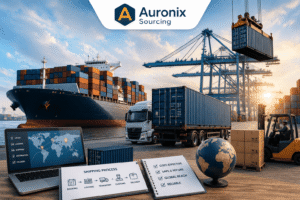
Container shipping is the process of transporting goods inside large, standardized steel containers that are loaded onto cargo ships, trains, and trucks.
These containers protect products during transportation while making loading, unloading, and international shipping more efficient.
Container shipping is widely used because it is:
- Cost-effective
- Secure
- Reliable
- Suitable for large shipments
- Accepted worldwide
Most international sea freight shipments from China are transported using shipping containers.
Why Container Shipping Is Popular
Businesses choose container shipping because it offers several advantages:
- Lower shipping costs for bulk orders
- Safe transportation for a wide range of products
- Standardized handling across global ports
- Efficient loading and unloading
- Easy movement between ships, trucks, and rail networks
It is especially beneficial for companies importing large quantities of products.
Common Container Sizes
The two most common container sizes used in international shipping are:
20-Foot Container
A 20-foot container is suitable for:
- Heavy products
- Medium-sized shipments
- Smaller wholesale orders
It offers a good balance between capacity and transportation cost.
40-Foot Container
A 40-foot container provides significantly more cargo space than a 20-foot container.
It is commonly used for:
- Large wholesale shipments
- Furniture
- Home goods
- Consumer products
- High-volume inventory
For businesses importing large quantities, a 40-foot container often provides a lower shipping cost per unit.
Full Container Load (FCL)
Full Container Load (FCL) means one importer uses the entire shipping container.
Advantages
- Lower cost per unit for large shipments
- Less cargo handling
- Reduced risk of product damage
- Faster loading and unloading
- Greater shipment security
Best For
- Large inventory orders
- High-volume businesses
- Manufacturers
- Wholesalers
- Established importers
Less than Container Load (LCL)
Less than Container Load (LCL) allows multiple businesses to share space in the same container.
Each importer pays only for the space their cargo occupies.
Advantages
- Lower upfront shipping cost
- Suitable for smaller shipments
- No need to fill an entire container
Disadvantages
- More cargo handling
- Longer consolidation and deconsolidation times
- Slightly higher risk of delays or damage compared to FCL
Best For
- Startups
- Small businesses
- Amazon FBA sellers
- Trial orders
- Low-volume imports
How Container Shipping Works
The container shipping process generally follows these steps.
Step 1: Manufacturing
Your supplier manufactures the products according to the agreed specifications.
Step 2: Product Inspection
Before shipment, many businesses arrange a quality inspection to verify:
- Product quality
- Quantity
- Packaging
- Labeling
- Workmanship
This helps ensure products meet your expectations before they leave the factory.
Step 3: Container Loading
Products are packed into the shipping container at the factory or a logistics warehouse.
Proper loading is essential to:
- Prevent product damage
- Maximize container space
- Improve transportation safety
Step 4: Export from China
The container is transported to a seaport, where export customs clearance is completed before the cargo is loaded onto a vessel.
Step 5: Ocean Transportation
The cargo ship transports the container to the destination country’s port.
Transit times vary depending on:
- Destination
- Shipping route
- Port congestion
- Weather conditions
Step 6: Import Customs Clearance
After arrival, customs authorities review the shipment before releasing it for delivery.
Importers may need to pay:
- Import duties
- Taxes
- Customs processing fees
Depending on the agreed Incoterms, some of these responsibilities may be handled by the seller or logistics provider.
Step 7: Final Delivery
Once customs clearance is complete, the container or cargo is delivered to:
- Warehouse
- Distribution center
- Retail location
- Amazon FBA fulfillment center
- Business address
Factors That Affect Container Shipping Costs
Several factors influence shipping costs.
These include:
- Container size
- Shipment volume
- Product weight
- Destination country
- Freight rates
- Fuel costs
- Port charges
- Customs duties
- Seasonal demand
Understanding these factors helps businesses estimate total landed costs more accurately.
How Long Does Container Shipping Take?
Transit times vary depending on the destination and shipping route.
Typical sea freight transit times from China range from 25 to 45 days, although actual delivery times may differ based on customs processing, weather conditions, and port congestion.
Businesses should also account for manufacturing time and quality inspections when planning inventory.
FCL vs LCL: Which Should You Choose?
Choose FCL If:
- You’re importing large quantities.
- You can fill most or all of a container.
- You want faster handling and greater shipment security.
- Lower cost per unit is your priority.
Choose LCL If:
- You’re placing smaller orders.
- You want to reduce upfront shipping costs.
- You’re testing a new product.
- You don’t need a full container.
As your business grows, many importers transition from LCL to FCL to improve cost efficiency.
Tips for Successful Container Shipping
To improve shipping efficiency:
- Plan inventory early.
- Choose the correct container size.
- Optimize product packaging.
- Verify suppliers before production.
- Conduct pre-shipment inspections.
- Prepare accurate shipping documents.
- Work with experienced freight partners.
These practices help reduce delays, minimize damage, and improve overall logistics performance.
Why Choose Auronix Sourcing?
Managing international container shipments requires careful coordination and local expertise.
At Auronix Sourcing, we provide complete sourcing and logistics solutions to help businesses import from China with confidence.
Our services include:
- Product sourcing
- Supplier verification
- Factory audits
- Supplier comparison
- Price negotiation
- Product customization
- Sample management
- Production monitoring
- Quality inspections
- Packaging verification
- Freight coordination
- FCL and LCL shipping
- Air freight
- Sea freight
- DDP shipping
- Door-to-door logistics
Our experienced team works directly with trusted manufacturers and logistics partners to ensure your products are shipped safely, efficiently, and at the most competitive cost.
Common Container Shipping Mistakes to Avoid
Many importers increase costs by making avoidable mistakes.
Common examples include:
- Choosing the wrong container size
- Poor inventory planning
- Inefficient packaging
- Skipping quality inspections
- Failing to verify suppliers
- Preparing incomplete shipping documents
- Ignoring total landed costs
Avoiding these mistakes helps create a more reliable and cost-effective supply chain.
Conclusion
Container shipping is the most economical and widely used method for transporting products from China to international markets. Whether you choose Full Container Load (FCL) for large shipments or Less than Container Load (LCL) for smaller orders, understanding how container shipping works can help you reduce costs, improve delivery planning, and protect your products during transit.
The right shipping strategy depends on your order size, budget, and business goals. By selecting the appropriate container option, preparing accurate documentation, and planning shipments in advance, businesses can build a more efficient and reliable import process.
With Auronix Sourcing as your trusted sourcing and logistics partner, you gain expert support in supplier verification, production monitoring, quality inspections, freight coordination, container shipping, and door-to-door delivery—helping you import from China safely, efficiently, and with complete confidence.