
For small businesses importing products from China, choosing the right shipping method is one of the most important decisions you’ll make. Shipping costs, delivery speed, customs procedures, and product type all affect your profitability and customer satisfaction.
Many new importers assume the fastest shipping method is always the best. In reality, the ideal option depends on your budget, order size, inventory planning, and business goals. A startup ordering product samples has different shipping needs than an established eCommerce brand importing bulk inventory.
At Auronix Sourcing, we help startups, Amazon FBA sellers, online retailers, wholesalers, and private label brands choose the most efficient shipping solutions for their business. From freight coordination and quality inspections to door-to-door delivery, we simplify international logistics so you can focus on growing your business.
In this guide, we’ll explore the best shipping methods for small businesses importing from China and help you decide which option is right for you.
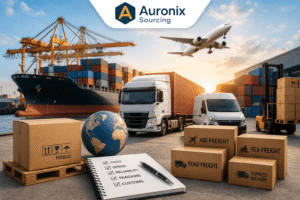
Factors to Consider Before Choosing a Shipping Method
Before selecting a shipping method, evaluate the following:
- Shipment size
- Product weight
- Delivery deadline
- Shipping budget
- Product value
- Inventory levels
- Destination country
- Customer expectations
Understanding these factors will help you choose the most cost-effective and reliable shipping solution.
1. Express Courier
Express courier services are the fastest way to ship products from China.
This option is commonly used for:
- Product samples
- Small orders
- Replacement items
- Urgent shipments
- High-value products
Advantages
- Fast delivery (typically within a few days)
- Door-to-door service
- Easy shipment tracking
- Simplified customs processing
- Reliable delivery schedules
Disadvantages
- Highest shipping cost
- Not economical for heavy or bulky products
- Weight and size limitations
Express shipping is ideal for businesses that need products quickly or want to test new products before placing larger orders.
2. Air Freight
Air freight provides an excellent balance between speed and cost.
It is suitable for:
- Amazon FBA inventory
- Medium-sized shipments
- Time-sensitive products
- Electronics
- Fashion accessories
- Private label launches
Advantages
- Faster than sea freight
- Lower cost than express courier for larger shipments
- Reliable international schedules
- Reduced inventory shortages
Disadvantages
- Higher cost than sea freight
- More expensive for large or heavy cargo
For many growing small businesses, air freight offers the best balance between delivery speed and transportation costs.
3. Sea Freight
Sea freight is the most economical shipping method for larger shipments.
It works well for:
- Wholesale inventory
- Furniture
- Home goods
- Bulk product orders
- Heavy cargo
Advantages
- Lowest shipping cost per unit
- Ideal for high-volume imports
- Suitable for heavy products
- Large container capacity
Disadvantages
- Longest transit times
- Requires better inventory planning
- More affected by port congestion and shipping schedules
As your business grows and order volumes increase, sea freight often becomes the most cost-effective shipping solution.
4. Door-to-Door (DDP) Shipping
Many small businesses prefer Delivered Duty Paid (DDP) shipping because it simplifies the importing process.
With DDP shipping, the logistics provider typically manages:
- Export documentation
- International transportation
- Customs clearance
- Import duties and taxes (as agreed)
- Final delivery
Advantages
- Convenient for beginners
- Fewer logistics responsibilities
- Predictable shipping costs
- Simplified customs process
Disadvantages
- Less control over shipping arrangements
- Total shipping cost may be higher than managing logistics independently
DDP is particularly popular among first-time importers and businesses without dedicated logistics teams.
Shipping Method Comparison
| Shipping Method | Delivery Speed | Cost | Best For |
|---|---|---|---|
| Express Courier | Very Fast | High | Samples, urgent shipments, small packages |
| Air Freight | Fast | Medium | Medium-sized shipments, Amazon FBA, time-sensitive products |
| Sea Freight | Slow | Low | Bulk orders, heavy cargo, wholesale imports |
| DDP Shipping | Depends on transport mode | Medium | Small businesses seeking a simple, all-in-one shipping solution |
Which Shipping Method Is Best for Your Business?
Startups
If you’re launching your first product, begin with:
- Product samples via express courier
- Small inventory by air freight
- DDP shipping if you want a simpler import process
This approach allows you to test product quality and market demand before committing to larger orders.
Amazon FBA Sellers
Amazon sellers often use:
- Air freight for urgent inventory replenishment
- Sea freight for planned bulk shipments
- DDP shipping for direct delivery to Amazon fulfillment centers (where appropriate)
Choosing the right method helps avoid stock shortages while managing shipping costs.
eCommerce Businesses
Online retailers typically balance:
- Fast delivery for new product launches
- Cost-effective shipping for regular inventory
- Seasonal demand planning
Many successful eCommerce brands combine air and sea freight depending on their inventory needs.
Wholesale Businesses
Wholesale importers generally benefit from:
- Sea freight for bulk shipments
- Shipment consolidation
- Long-term freight planning
This minimizes transportation costs and improves overall profitability.
Tips for Reducing Shipping Costs
Shipping costs can have a significant impact on your bottom line. To keep expenses under control:
- Plan inventory well in advance.
- Consolidate shipments whenever possible.
- Optimize product packaging.
- Compare freight options.
- Choose the most suitable shipping method—not simply the fastest.
- Conduct quality inspections before shipment.
- Avoid emergency air freight caused by poor inventory planning.
Good logistics planning often saves more money than negotiating small reductions in product prices.
Common Shipping Mistakes to Avoid
Many small businesses increase costs by making avoidable mistakes.
These include:
- Choosing air freight for large, heavy shipments
- Waiting until inventory runs out
- Ignoring total landed costs
- Skipping quality inspections
- Using oversized packaging
- Selecting shipping methods based only on price
Avoiding these mistakes can improve both profitability and customer satisfaction.
Why Choose Auronix Sourcing?
At Auronix Sourcing, we help small businesses import products from China safely, efficiently, and cost-effectively.
Our services include:
- Product sourcing
- Supplier verification
- Factory audits
- Supplier comparison
- Price negotiation
- Product customization
- Sample management
- Production monitoring
- Quality inspections
- Packaging verification
- Air freight coordination
- Sea freight coordination
- DDP shipping
- Door-to-door logistics
Our experienced team works directly with trusted manufacturers and logistics partners to recommend the best shipping solution based on your business goals, budget, and delivery timeline.
Best Practices for Small Business Shipping
To build an efficient supply chain:
- Forecast demand accurately.
- Order inventory early.
- Select shipping methods based on business needs.
- Verify suppliers before production.
- Inspect products before shipment.
- Calculate total landed costs.
- Build long-term relationships with reliable logistics partners.
Following these practices helps reduce shipping costs while improving delivery reliability.
Conclusion
The best shipping method for your small business depends on your products, order volume, budget, and delivery timeline. Express courier is ideal for samples and urgent shipments, air freight offers a great balance between speed and cost, sea freight is the most economical option for bulk orders, and DDP shipping simplifies the entire importing process for businesses that want a hassle-free experience.
There is no one-size-fits-all solution. Many successful businesses use a combination of shipping methods throughout the year to balance speed, cost, and inventory management.
With Auronix Sourcing as your trusted sourcing and logistics partner, you receive expert guidance on supplier verification, freight planning, quality inspections, customs coordination, and international shipping—helping your business import from China efficiently, reduce logistics costs, and grow with confidence.