
When importers negotiate with manufacturers, they usually focus on product specifications, MOQ, materials, packaging, and order quantity. However, another factor can significantly influence the quotation: when you place the order.
Factories do not operate under identical conditions throughout the year. Their production capacity, labor availability, material costs, customer demand, and production schedules constantly change. A factory that is eager to accept your order during a quiet period may negotiate very differently when its production lines are nearly full.
For importers, understanding factory timing can create opportunities to secure better pricing, more reliable lead times, and stronger production priority.
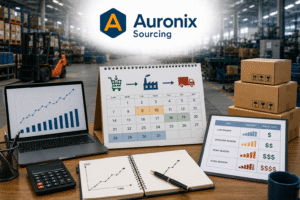
Why Timing Matters in Manufacturing
A factory’s pricing is influenced partly by how efficiently it can use its resources.
These include:
- Machinery
- Production lines
- Workers
- Raw materials
- Warehouse space
- Quality-control teams
- Subcontractors
Factories generally want these resources operating efficiently.
When production capacity is underutilized, manufacturers may become more flexible commercially. When demand is extremely high, factories have less incentive to offer aggressive prices.
This creates an important relationship:
Order Timing → Factory Capacity → Negotiation Position → Pricing
1. Low-Season Orders May Receive Better Pricing
Many manufacturing industries experience seasonal demand.
During slower periods, factories may have unused production capacity.
A manufacturer with idle machinery and available workers still has fixed operating costs. Securing additional orders can therefore become commercially attractive.
During these periods, factories may be more willing to discuss:
- Better unit pricing
- Lower MOQ
- Flexible production schedules
- Faster lead times
- Improved customization terms
This does not mean every factory automatically discounts prices during quiet periods.
But available capacity can improve your negotiation position.
2. Peak Season Can Reduce Your Negotiating Power
The opposite happens when factories are operating close to full capacity.
Suppose a factory has enough capacity for 500,000 units per month but already has confirmed orders for 480,000.
Your additional order is competing for limited production resources.
The manufacturer may have little reason to reduce its margin aggressively.
In some cases, accepting your order may require:
Overtime + Additional Shifts + Subcontracting + Expedited Materials
Those additional costs can increase the quotation.
This is why placing orders at the last minute during peak production periods can be expensive.
3. Chinese New Year Can Affect Order Economics
For businesses sourcing from China, Chinese New Year is an important production-planning consideration.
Factories and upstream suppliers may experience significant operational disruption around the holiday period.
Before the shutdown, many buyers rush to complete production.
This can create pressure across:
Factories → Component Suppliers → Packaging Suppliers → Logistics Providers
After operations resume, factories may also need time to restore normal staffing and production efficiency.
Importers should plan well in advance rather than assuming normal lead times will apply around major manufacturing holidays.
4. Seasonal Products Require Earlier Planning
Timing becomes even more important for products tied to specific selling seasons.
Examples include:
- Halloween products
- Christmas products
- Summer accessories
- Winter products
- Back-to-school items
- Holiday gift products
Missing the sales window can be far more expensive than paying a slightly higher manufacturing price.
For seasonal products, work backward from the required inventory date:
Selling Date → Warehouse Arrival → International Shipping → Inspection → Production → Sample Approval → Purchase Order
This provides a more realistic ordering deadline.
5. Raw Material Timing Can Change Quotes
Factories purchase raw materials at different times.
If steel, aluminum, copper, plastics, fabric, paper, or other important inputs change in price, your quotation may change too.
Suppose a supplier quoted your product 60 days ago.
By the time you confirm the order, its material costs may be different.
This is why quotations frequently include a validity period.
If you delay confirmation, do not automatically assume the original price remains available.
Ask whether any material changes have affected the current quotation.
6. Material Inventory Can Create Temporary Opportunities
Sometimes factories already hold materials purchased at previous prices.
If the supplier has sufficient stock for your order, it may be able to maintain pricing even when market costs have recently increased.
Another manufacturer purchasing materials specifically for your order may quote higher.
This helps explain why two factories can react differently to the same market conditions.
Ask whether important materials are:
In Stock → Purchased Per Order → Subject to Current Market Pricing
The answer can help explain quotation validity.
7. Urgent Orders Can Cost More
Buyers sometimes request extremely short production schedules.
For example:
Normal Lead Time: 35 Days
Requested Lead Time: 18 Days
To achieve this, the factory may need to reorganize its production schedule, add overtime, prioritize material procurement, or use additional resources.
The resulting quotation may therefore be higher.
Before paying for urgency, determine whether the shortened schedule is genuinely achievable.
An expensive “urgent order” that still ships late provides no commercial advantage.
8. Flexible Timing Can Strengthen Negotiation
Importers with flexible delivery requirements may have more options.
You might tell the supplier:
“We need this order within the next 60 days. Which production window gives you the best efficiency?”
The factory may be able to schedule your order between larger customer runs.
This can reduce production disruption and potentially improve commercial terms.
Flexibility has value.
If your order can fit naturally into the factory’s schedule, it may become easier and more profitable for the manufacturer to accept.
9. Reordering Too Late Can Increase Costs
Repeat orders should ideally be planned before inventory becomes critical.
Waiting until stock is almost exhausted can remove your negotiating flexibility.
You may be forced to accept:
- Higher factory pricing
- Expedited production
- Air freight
- Partial shipments
- Alternative materials
- Higher logistics costs
A product that was originally economical can become expensive because the reorder was placed too late.
Use inventory forecasts to determine when production needs to begin.
10. Forecasting Can Improve Factory Planning
Giving suppliers realistic forecasts can help them prepare for future demand.
For example:
| Period | Forecast |
|---|---|
| October | 5,000 units |
| December | 8,000 units |
| February | 12,000 units |
A forecast is not necessarily a confirmed purchase order unless contractually agreed.
However, it gives the manufacturer useful visibility.
The factory may be able to plan raw materials, labor, and capacity more efficiently.
Predictable customers can sometimes negotiate better long-term arrangements than buyers who repeatedly place urgent orders without warning.
11. Large Orders Need Earlier Capacity Reservations
High-volume orders require more factory resources.
If you intend to increase from 5,000 units to 50,000 units, do not assume the supplier can simply multiply its previous production schedule.
Ask:
When must we confirm the order to reserve sufficient capacity?
The factory may need to plan:
Materials → Components → Production Lines → Workers → Packaging
Early capacity discussions can reduce the risk of delays and unexpected pricing changes.
12. Packaging Suppliers Have Their Own Schedules
Your main factory is not the only company involved.
Custom packaging may come from separate suppliers.
Labels, cartons, inserts, manuals, and retail boxes can all have independent production schedules.
During busy periods, packaging delays can prevent completed products from shipping.
Therefore, production timing should include the wider supply chain—not just final assembly.
13. Logistics Timing Also Affects Total Cost
Even if factory pricing remains unchanged, order timing can influence your total landed cost.
Late production may force you to replace planned sea freight with faster transportation.
For example:
Planned: Sea Freight
becomes:
Emergency: Air Freight
The additional logistics expense can easily exceed any savings achieved through factory negotiation.
Importers should therefore optimize total supply-chain timing, not merely purchase price.
14. Avoid Ordering Based Only on Discounts
A factory may occasionally offer attractive pricing because it wants to fill available capacity.
That can be a legitimate opportunity.
However, do not place unnecessary inventory orders solely because the factory offers a temporary discount.
Excess inventory creates its own costs:
Storage + Cash Flow + Obsolescence + Unsold Stock
Factory timing should support your inventory strategy rather than replace it.
15. Build Timing Into Supplier Negotiations
Instead of negotiating only unit price, discuss timing directly.
Ask suppliers:
When is your production capacity lowest?
How early should we reserve capacity for peak season?
How long is this quotation valid?
Would flexible production timing improve pricing?
When should we confirm our next repeat order?
These questions can reveal opportunities that simple price negotiations miss.
How Auronix Approaches Production Timing
Auronix Sourcing treats order timing as part of the complete sourcing and production strategy.
Depending on the project, this can include supplier communication, quotation comparison, production planning, sample approval, material preparation, capacity confirmation, production monitoring, quality inspection, packaging verification, and shipping coordination.
The objective is to help importers avoid unnecessary costs created by late purchasing decisions, production bottlenecks, rushed manufacturing, and emergency logistics.
Good sourcing is not only about negotiating the right price. It is also about placing the right order at the right time.
Conclusion
Order timing can influence factory pricing because manufacturing capacity and production economics change throughout the year.
Factors such as:
Peak Season → Factory Capacity → Raw Material Prices → Holidays → Labor Availability → Order Urgency → Packaging Schedules
can all affect the final quotation.
Importers who consistently place urgent orders may have less negotiating power and face higher production and logistics costs.
Businesses that forecast demand, reserve capacity early, understand supplier schedules, and maintain flexibility can negotiate from a stronger position.
Most importantly, evaluate timing based on the complete supply chain.
Saving $0.20 per unit means little if a late order eventually requires expensive air freight or causes a seasonal stockout.
The strongest sourcing strategy combines competitive factory pricing, realistic production planning, inventory forecasting, quality control, and efficient shipping—ensuring that products are manufactured not only at the right cost, but at the right time.