
Product color may seem like a simple design decision, but in manufacturing, changing a color can affect much more than appearance. For importers, ecommerce brands, and private-label businesses, a custom color can influence raw material purchasing, MOQ, setup costs, production efficiency, sampling, quality control, and even defect rates.
A factory may offer a black product at $4.20 per unit but quote $4.55 for the same product in a specific Pantone color. That price difference does not necessarily mean the supplier is overcharging. The custom color may require additional materials, machine preparation, smaller production runs, or specialized finishing.
Understanding how color affects manufacturing costs allows buyers to make better product-development decisions and negotiate quotations more effectively.
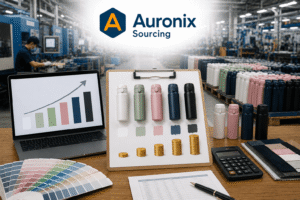
Why Standard Colors Usually Cost Less
Factories often manufacture certain colors repeatedly.
Common colors such as:
- Black
- White
- Grey
- Transparent
- Standard factory colors
may already be used for multiple customers.
This allows the manufacturer to purchase materials in larger quantities, reduce machine changeovers, and combine similar production runs.
A custom color can interrupt this efficiency.
Instead of using existing materials, the factory may need to purchase or prepare a dedicated batch specifically for your order.
That additional work can increase your cost.
1. Custom Color Matching Requires Development
If you request an exact brand color, the supplier may need to develop a formula that matches your reference.
For example, instead of requesting simply:
“Blue”
you might specify:
Pantone 18-4052 TCX or another appropriate color reference.
The factory may need to create several trials before achieving an acceptable match.
The process can involve:
Color Formula → Trial Sample → Comparison → Adjustment → New Sample → Approval
Every iteration consumes materials, machine time, and labor.
For complex products, color-development fees may therefore appear separately from the mass-production price.
2. Pigments and Colorants Have Different Costs
Not every color costs the same to manufacture.
Different pigments, dyes, masterbatches, paints, coatings, inks, and finishes have different prices.
A standard black pigment may be widely available and inexpensive.
A specialized metallic, fluorescent, pearlescent, pastel, or highly specific custom shade may require more expensive materials.
The impact depends on the manufacturing process.
For plastic injection molding, color may come from masterbatch.
For textiles, it may involve dyeing.
For metal products, the color may come from:
Powder Coating → Painting → Anodizing → Plating
Each process has its own cost structure.
3. Custom Colors Can Create Higher MOQs
Color is one reason factories sometimes increase minimum order quantities.
Suppose your product requires only 500 kilograms of custom-colored plastic, but the upstream material supplier requires a minimum batch of 1,000 kilograms.
The factory must either:
- Purchase excess material
- Store the remaining material
- Charge you for the unused portion
- Increase your MOQ
This means the MOQ may not originate from the final assembly factory.
It may come from the supplier producing the custom material.
When a factory gives you a high color MOQ, ask:
“Which production or material requirement creates this MOQ?”
That question can make negotiations much more productive.
4. Small Color Runs Can Be Less Efficient
Factories generally prefer long, continuous production runs.
Imagine the production schedule contains:
20,000 Black Units → 1,000 Custom Green Units → 30,000 Black Units
To manufacture your custom green batch, the factory may need to stop production, clean equipment, change material, adjust settings, test the color, and restart production.
These changeovers create downtime.
If your custom-color order is small, the setup cost is distributed across fewer units.
That can increase the unit price.
5. Machine Cleaning Adds Cost
Color changes can require significant equipment cleaning.
This is particularly important when moving between very different colors.
For example, switching from a dark material to a light material may require additional cleaning to prevent contamination.
Residual pigment can create:
- Color streaks
- Spots
- Uneven appearance
- Mixed shades
The factory may need to discard some material while stabilizing the new color.
This material loss becomes part of the manufacturing cost.
6. Multiple Colors Can Increase Your Total Cost
Brands sometimes want one product available in several colors.
Suppose you order 10,000 units divided into:
2,000 Black + 2,000 White + 2,000 Blue + 2,000 Green + 2,000 Pink
From a marketing perspective, this gives customers more choice.
From the factory’s perspective, it may represent five smaller production batches rather than one efficient 10,000-unit run.
Each color may require:
Material Preparation + Machine Setup + Production Changeover + QC
Therefore, five colors can cost more than producing all 10,000 units in one color.
7. Color Can Affect Defect Rates
Color also influences how visible manufacturing defects become.
Certain finishes may reveal:
- Scratches
- Flow marks
- Dust
- Uneven coating
- Surface imperfections
- Color variation
A glossy black surface, for example, may visually expose imperfections differently from a textured finish.
If a particular color requires stricter cosmetic standards or creates more rejected units, the factory may need to account for a higher production loss rate.
That can affect pricing.
8. Different Materials Reproduce Colors Differently
An important challenge in product development is that the same color reference may look different on different materials.
Imagine your product contains:
Plastic Body + Silicone Button + Metal Component + Printed Packaging
Even if every supplier receives the same color reference, the final appearance may not be perfectly identical.
Material texture, gloss level, transparency, and manufacturing process can influence perceived color.
This makes color matching more complicated for multi-material products.
Importers should define acceptable tolerances rather than expecting impossible visual perfection.
9. Surface Finish Changes Color Appearance
Color cannot always be evaluated separately from surface finish.
The same nominal color can appear different when applied as:
Matte → Gloss → Satin → Textured
Lighting conditions also influence appearance.
When approving a sample, document both the color and finish.
A specification stating only “dark blue” is usually insufficient for a highly appearance-sensitive product.
10. Color Samples Can Increase Development Cost
For customized products, never rely only on a digital image.
Computer screens, phones, cameras, and lighting conditions can display colors differently.
Where color accuracy is commercially important, factories may prepare physical color samples.
The process could require several rounds:
Sample 1 → Too Dark
Sample 2 → Too Warm
Sample 3 → Approved
These iterations add time and development cost.
However, approving color properly before mass production is usually much cheaper than discovering a major mismatch after thousands of units have been manufactured.
11. Packaging Color Can Also Affect Cost
Product color is not the only consideration.
Custom packaging may involve:
- CMYK printing
- Pantone spot colors
- Foil stamping
- Metallic effects
- UV coating
- Specialty finishes
A simple one-color printed box may cost less than sophisticated multi-color premium packaging.
If brand consistency is important, the packaging supplier may also need to match specific brand colors.
This should be included in the overall customization budget.
12. Color Consistency Across Orders Can Be Difficult
A product approved today should ideally look similar when reordered six months later.
However, color variation can occur because of:
Different Material Batch + Different Pigment Batch + Different Machine Settings + Different Production Conditions
For repeat products, maintain an approved physical reference where appropriate.
The supplier should compare future production against the agreed standard.
This is particularly important when products from different production batches will be sold together.
13. Color Changes Can Affect Lead Time
Custom colors may require additional procurement and development time.
A standard black product may use material already available in the factory warehouse.
A custom brand color may require:
Color Development → Material Order → Sample Approval → Mass Production
This can extend the timeline before manufacturing begins.
Seasonal brands should include color development in their production planning rather than treating it as a last-minute decision.
14. How to Reduce Custom Color Costs
Importers can often reduce color-related costs without sacrificing branding.
Consider:
Using Existing Factory Colors — Ask the supplier for its standard color chart.
Increasing Volume Per Color — Larger runs can distribute setup costs more efficiently.
Reducing the Number of Variants — Launch with your strongest colors before expanding.
Approving Colors Early — Prevent production delays caused by late revisions.
Using One Base Product — Apply branding through packaging or accessories instead of creating many custom material colors.
The best solution depends on the product and brand positioning.
15. Ask for Color Costs Separately
When evaluating customization, request clear pricing.
For example:
| Requirement | Cost Impact |
|---|---|
| Standard Factory Color | Base price |
| Custom Pantone Color | Additional unit/setup cost |
| Color Sample | Development charge if applicable |
| Multiple Colors | MOQ per color |
| Special Finish | Additional processing |
| Custom Packaging Color | Separate packaging cost |
This allows you to identify whether the cost increase comes from materials, setup, production inefficiency, or finishing.
How Auronix Approaches Custom Color Sourcing
Auronix Sourcing treats color as part of the complete product specification rather than a simple visual preference.
Depending on the project, this can involve confirming color references, materials, surface finishes, sample approvals, MOQ requirements, packaging, production specifications, and quality-control criteria.
For multi-color or private-label products, the objective is to balance brand differentiation with manufacturing efficiency.
Instead of simply asking factories to make every possible color, buyers can evaluate which variants make commercial sense based on MOQ, setup costs, expected sales volume, and inventory requirements.
Conclusion
Changing a product’s color can affect manufacturing cost because color is connected to much more than appearance.
It can influence:
Materials → Pigments → MOQ → Machine Setup → Cleaning → Production Efficiency → Sampling → Defect Rates → Quality Control
Standard factory colors are often cheaper because the manufacturer already purchases those materials and produces them regularly.
Custom colors may require dedicated materials, smaller production batches, additional setup, physical samples, and stricter consistency controls.
Before approving multiple color variants, ask your supplier about the MOQ per color, setup charges, material requirements, sample costs, lead-time impact, and acceptable color tolerance.
A strong color strategy should support both branding and manufacturing economics.
For importers, the goal is not simply to achieve the perfect shade. It is to create a product color system that is visually consistent, commercially attractive, scalable to manufacture, and profitable across repeated production orders.