
A factory can have available workers, functioning machinery, approved samples, and a confirmed production schedule—and still be unable to manufacture your order.
The missing piece may be raw materials.
Every manufactured product depends on materials and components arriving at the right place, in the correct specification, and at the right time. Plastic resin, metals, fabrics, electronic components, chemicals, packaging materials, and many other inputs must often be secured before production can proceed.
When a factory runs out of a critical material, the consequences can range from a minor scheduling adjustment to a significant production delay.
For importers, understanding how factories manage material shortages can help prevent unexpected substitutions, quality problems, and missed shipment dates.
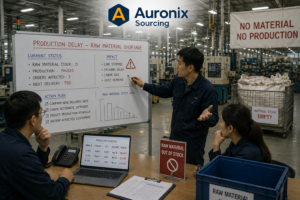
Why Factories Do Not Keep Unlimited Materials
It may seem logical for a factory to maintain enough inventory to cover every future order.
In practice, that would require enormous amounts of working capital and warehouse space.
Factories generally balance inventory against expected demand.
Keeping excessive materials creates costs involving:
- Storage
- Insurance
- Working capital
- Damage
- Obsolescence
Some materials can also deteriorate over time.
Manufacturers therefore often purchase materials according to confirmed orders, forecasts, or planned production requirements.
Standard and Custom Materials Are Different
The risk of shortages depends heavily on the material.
A factory may regularly stock common materials used across many products.
Customized materials can be very different.
Examples might include:
- Special fabric colors
- Custom plastic compounds
- Unique metal grades
- Specialized finishes
- Proprietary components
These may need to be ordered specifically for your project.
That creates additional lead time and dependency on upstream suppliers.
The Factory First Checks Existing Inventory
When a material shortage appears, the purchasing or production team typically determines:
- How much material remains
- How much the order requires
- Whether additional inventory exists elsewhere
- When replenishment can arrive
Sometimes the shortage is small enough to manage without significantly affecting production.
In other cases, the entire order may need to wait.
The Purchasing Team Contacts Existing Suppliers
The factory will usually contact its established material suppliers first.
Existing suppliers are valuable because the manufacturer may already understand their:
- Quality
- Specifications
- Pricing
- Delivery reliability
The factory may ask whether material can be supplied faster or whether inventory is available from another warehouse.
If replenishment is available quickly, the disruption may be limited.
Production May Be Partially Completed
If some material is available, the factory may begin producing part of the order.
For example, enough material may exist for 4,000 units of a 10,000-unit purchase order.
The factory could manufacture those units while waiting for additional material.
Whether this is efficient depends on production setup, tooling, labor, and the expected replenishment date.
Partial production can help maintain progress but may also create additional changeovers.
The Production Schedule May Be Rearranged
Factories rarely leave expensive equipment idle if another order can be manufactured.
If your material is unavailable, the factory may temporarily move another customer’s order forward.
When your material finally arrives, your original production slot may already be occupied.
This creates an important effect:
A five-day material delay does not always equal a five-day production delay.
If the next available manufacturing window is later, the total schedule impact can be significantly larger.
The Factory May Search for Another Material Supplier
If the regular supplier cannot deliver quickly enough, the factory may investigate alternative sources.
This can solve the availability problem—but introduces a quality-control question.
Material from another supplier may differ in:
- Composition
- Color
- Texture
- Performance
- Consistency
For critical specifications, buyers should not assume that “equivalent material” is automatically equivalent.
Alternative materials may require appropriate verification before use.
Unauthorized Substitution Is a Major Risk
One of the most important risks during material shortages is silent substitution.
A factory under delivery pressure may be tempted to replace the specified material with something easier to obtain.
Depending on the product, this could affect:
- Durability
- Appearance
- Performance
- Safety
- Compliance
Important material specifications should therefore be documented clearly.
The supplier should understand that material changes affecting agreed specifications require appropriate approval.
Material Verification May Be Necessary
For products where material composition significantly affects performance, additional verification may be appropriate.
Depending on the product, this could involve:
- Supplier documentation
- Material certificates
- Physical inspection
- Testing
The required level of control should reflect the product’s risk and regulatory requirements.
Not every low-risk consumer product requires laboratory material testing, but critical materials should not be treated casually.
Color Matching Can Become Difficult
Material shortages can create cosmetic problems even when the replacement material is technically similar.
This is particularly relevant for:
- Plastics
- Fabrics
- Coatings
- Printed materials
Different production batches can sometimes produce slight color or texture variations.
For brands requiring strong visual consistency, these differences can matter.
Approved color standards and samples can help factories evaluate new batches.
Raw-Material Prices May Increase
A shortage can affect cost as well as availability.
If market supply becomes tight, the factory’s purchase price may rise.
Depending on the agreement, the supplier may:
- Absorb the increase
- Request a price adjustment
- Negotiate an alternative
Importers should understand how long quotations remain valid and how significant material-price changes are handled commercially.
Minimum Order Quantities Can Create Problems
Upstream material suppliers often have their own MOQs.
Imagine your factory needs only 300 kilograms of a custom material, but the material producer requires a minimum order of 1,000 kilograms.
The manufacturer then has to decide whether to:
- Purchase excess inventory
- Negotiate with the material supplier
- Combine requirements across orders
- Ask the buyer to adjust quantity
This is one reason customized colors and materials can create higher MOQs than standard products.
Components Can Create the Same Problem
Material shortages are not limited to basic commodities.
For complex products, the critical shortage may involve:
- Batteries
- Motors
- Chips
- Displays
- Sensors
- Fasteners
One missing component can prevent completion of the entire product.
Professional production planning therefore tracks both raw materials and important purchased components.
Packaging Materials Can Stop Shipment
Even finished products cannot ship properly without the required packaging.
Shortages involving:
- Retail boxes
- Labels
- Inserts
- Protective materials
- Master cartons
can delay final packing.
Packaging should therefore be included in material planning from the beginning of the order.
Incoming Quality Control Matters
When replacement materials arrive, factories should not automatically send them directly into production.
Appropriate incoming checks may evaluate factors such as:
- Quantity
- Dimensions
- Appearance
- Material specification
This process is commonly associated with Incoming Quality Control (IQC).
Detecting incorrect material before manufacturing can prevent a much larger quantity of defective finished products.
Why Shortages Become Worse During Peak Seasons
Material availability can become more difficult during periods of high manufacturing demand.
Factories across an industry may simultaneously purchase large quantities of:
- Raw materials
- Components
- Packaging
Upstream suppliers then become overloaded.
Lead times increase, and buyers who order late may face longer replenishment periods.
This is why seasonal production should be planned earlier than normal.
Chinese New Year Can Affect Material Supply
Chinese New Year can disrupt both final factories and upstream suppliers.
Some material manufacturers may stop accepting new orders before the final assembly factory closes.
After the holiday, production can take time to return to normal.
Importers planning manufacturing around this period should therefore ask about upstream material deadlines—not only their final supplier’s holiday schedule.
Forecasting Can Reduce Shortage Risk
Repeat buyers can provide realistic purchasing forecasts to suppliers.
If the factory knows that you are likely to require regular production, it may be able to discuss material planning earlier.
Forecasts can help with:
- Long-lead components
- Custom colors
- Seasonal materials
- High-volume orders
However, forecasts should be credible.
Factories should not be expected to purchase large quantities of custom material based only on uncertain promises.
Ask About Material Lead Times Before Ordering
For important products, ask the supplier:
- Which materials are normally stocked?
- Which are purchased after order confirmation?
- Which materials have long lead times?
- Are any components currently difficult to obtain?
- Are custom materials subject to separate MOQs?
These questions can reveal supply risks before the deposit is paid.
Confirm Materials Before Mass Production
For products with critical material requirements, clearly define the approved specification before manufacturing begins.
Relevant documentation might identify:
- Material type
- Grade
- Color
- Finish
- Required performance characteristics
If a material change becomes necessary, document the revised approval.
This creates a clearer reference for production and inspection.
Monitor Material Readiness
Do not wait until the scheduled production date to discover that materials have not arrived.
Before production, request confirmation of material status.
For significant orders, useful milestones can include:
Materials Ordered → Materials Received → Incoming Check → Production Ready
This gives the buyer earlier visibility into potential delays.
Keep a Realistic Production Buffer
Even strong factories cannot completely eliminate upstream supply risk.
Importers should therefore maintain appropriate time buffers between expected production completion and critical inventory deadlines.
The correct buffer depends on:
- Product complexity
- Material availability
- Season
- Shipping method
Businesses operating with almost zero buffer are much more vulnerable to relatively small supplier delays.
Backup Suppliers Do Not Solve Every Material Shortage
Having a second factory can reduce manufacturing dependency.
But both factories may purchase materials from the same upstream suppliers.
This is particularly common inside specialized industrial clusters.
For strategically important products, understanding critical upstream dependencies can be just as important as maintaining a backup final-assembly factory.
How Auronix Sourcing Helps Manage Material Supply
Auronix Sourcing helps businesses coordinate material and component requirements as part of the wider manufacturing process.
Support can include supplier sourcing and verification, specification management, material and component follow-up, sample development, production scheduling, factory communication, production monitoring, quality inspection, packaging coordination, backup supplier development, shipment consolidation, and international shipping coordination.
For customized products, Auronix can help identify important long-lead materials earlier and maintain communication with manufacturers before those materials become production bottlenecks.
Conclusion
When a factory runs out of raw materials, production does not always stop permanently—but the supply chain must adjust.
The factory may replenish inventory, partially manufacture the order, reschedule production, or locate another material source.
The biggest risks arise when shortages lead to unexpected delays or unauthorized substitutions.
Importers can reduce these risks by documenting material specifications, understanding upstream lead times, confirming material readiness before production, planning earlier during peak seasons, and maintaining realistic inventory buffers.
With Auronix Sourcing, businesses can coordinate suppliers, materials, components, production schedules, quality control, packaging, and international logistics—helping identify material-related risks before they become expensive production and shipping problems.