
Original Equipment Manufacturing (OEM) is one of the most popular manufacturing solutions for businesses looking to create branded products without building their own factory. By partnering with an experienced manufacturer, companies can develop products based on their own specifications while selling them under their own brand name.
China has become a global leader in OEM manufacturing due to its advanced production capabilities, skilled workforce, extensive supplier network, and competitive manufacturing costs. Whether you’re an Amazon FBA seller, Shopify store owner, wholesaler, retailer, distributor, or private label brand, understanding the OEM product development process is essential for launching successful products.
At Auronix Sourcing, we help businesses manage every stage of OEM product development—from supplier selection and factory verification to production monitoring, quality inspections, and worldwide shipping.
This guide explains the complete OEM product development process from concept to delivery.
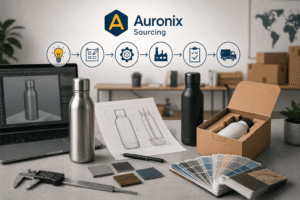
What Is OEM Manufacturing?
OEM (Original Equipment Manufacturing) is a manufacturing arrangement in which a factory produces products according to a buyer’s specifications. The finished products are then sold under the buyer’s own brand.
With OEM manufacturing, businesses can customize products by choosing:
- Product specifications
- Materials
- Colors
- Dimensions
- Features
- Logo placement
- Packaging
- Branding
OEM allows companies to create products that reflect their unique brand identity while relying on experienced manufacturers for production.
Benefits of OEM Product Development
OEM manufacturing offers several advantages:
- Stronger brand recognition
- Customized product design
- Better product differentiation
- Greater control over product specifications
- Higher profit potential
- Consistent product quality
- Long-term manufacturing partnerships
OEM is an excellent choice for businesses seeking to build a recognizable and scalable brand.
Step 1: Define Your Product Concept
Every OEM project begins with a clear product idea.
Determine:
- Product purpose
- Target customers
- Desired features
- Performance expectations
- Competitive advantages
- Target selling price
A well-defined concept provides direction for the entire development process.
Step 2: Prepare Detailed Product Specifications
Create a comprehensive product specification document for manufacturers.
Include:
- Product dimensions
- Materials
- Colors
- Technical requirements
- Product features
- Branding requirements
- Packaging specifications
- Quality standards
Detailed specifications reduce misunderstandings and improve production accuracy.
Step 3: Find Qualified OEM Manufacturers
Identify manufacturers with experience producing products similar to yours.
Evaluate suppliers based on:
- Manufacturing expertise
- Product specialization
- Production capacity
- Export experience
- OEM capabilities
- Communication quality
Working with experienced OEM factories improves product quality and production efficiency.
Step 4: Verify the Manufacturer
Before moving forward, verify the factory’s credentials.
Review:
- Business registration
- Factory location
- Manufacturing capabilities
- Production equipment
- Export history
- Quality management systems
Verification helps ensure the factory can meet your production requirements.
Step 5: Request Product Samples or Prototypes
Before mass production, request a prototype or sample.
Evaluate:
- Product quality
- Materials
- Functionality
- Appearance
- Workmanship
- Ergonomics
- Packaging
If changes are needed, refine the design before approving production.
Step 6: Finalize Product Design
Once the prototype meets your expectations, confirm all production details.
Finalize:
- Product specifications
- Materials
- Colors
- Dimensions
- Branding
- Packaging
- Labeling
- Accessories
Written approval ensures both parties are aligned before manufacturing begins.
Step 7: Negotiate Pricing and Production Terms
Discuss commercial terms with the manufacturer.
Negotiate:
- Unit pricing
- Minimum Order Quantity (MOQ)
- Production lead time
- Payment terms
- Packaging costs
- Shipping terms
A balanced agreement supports a long-term manufacturing partnership.
Step 8: Begin Mass Production
After final approval, the factory starts manufacturing.
Production typically includes:
- Material procurement
- Component manufacturing
- Product assembly
- Branding
- Packaging
- Final preparation for inspection
Regular production updates help keep the project on schedule.
Step 9: Monitor Production
Production monitoring allows issues to be identified before completion.
Monitor:
- Production progress
- Manufacturing schedule
- Product consistency
- Packaging preparation
- Estimated completion date
Ongoing oversight improves transparency and reduces delays.
Step 10: Conduct Quality Inspections
Arrange an independent inspection before shipment.
Inspectors verify:
- Product quality
- Quantity
- Dimensions
- Functionality
- Packaging
- Branding accuracy
- Labeling
- Workmanship
Quality inspections help ensure the finished products match the approved specifications and samples.
Step 11: Arrange International Shipping
After inspection approval, organize shipment.
Common shipping options include:
Air Freight
Suitable for:
- Urgent orders
- Smaller shipments
- High-value products
Sea Freight
Suitable for:
- Bulk production
- Lower transportation costs
- Large inventory
Door-to-Door (DDP) Shipping
Ideal for businesses seeking a simplified shipping solution with customs clearance and logistics handled by the shipping provider.
Step 12: Receive Products and Launch Your Brand
After delivery, inspect the shipment to confirm it matches the approved order.
Prepare for launch by focusing on:
- Product listings
- Marketing campaigns
- Inventory planning
- Customer support
- Sales channels
A well-planned product launch maximizes the return on your OEM investment.
Common OEM Product Development Mistakes
Many businesses experience avoidable problems because they:
- Provide incomplete product specifications
- Choose suppliers based only on price
- Skip supplier verification
- Approve production without testing samples
- Ignore quality inspections
- Fail to document customization requirements
- Neglect production monitoring
Avoiding these mistakes helps ensure a successful OEM project.
Why Work with Auronix Sourcing?
OEM product development requires technical knowledge, supplier management, and strict quality control.
At Auronix Sourcing, we simplify the OEM manufacturing process by managing every stage on your behalf.
Our services include:
- Product sourcing
- OEM manufacturer selection
- Supplier verification
- Factory audits
- Supplier comparison
- Price negotiation
- Product development support
- Product customization
- Private label manufacturing
- Sample management
- Production monitoring
- Quality inspections
- Packaging verification
- Freight coordination
- Air freight
- Sea freight
- Door-to-door logistics
Our experienced sourcing team works directly with verified Chinese manufacturers to help businesses develop high-quality OEM products while reducing sourcing risks and ensuring reliable production.
Best Practices for OEM Product Development
For successful OEM manufacturing:
- Develop detailed product specifications.
- Work only with verified manufacturers.
- Review prototypes carefully before production.
- Confirm all customization requirements in writing.
- Monitor production regularly.
- Conduct pre-shipment quality inspections.
- Calculate total landed costs.
- Build long-term manufacturing partnerships.
These best practices help businesses produce consistent, high-quality products while minimizing risk.
Conclusion
OEM product development is an effective way for businesses to create branded products without investing in their own manufacturing facilities. By working with experienced manufacturers and following a structured development process, companies can customize products, strengthen their brand identity, and compete more effectively in global markets.
Success depends on careful planning, selecting the right manufacturing partner, verifying suppliers, approving prototypes, monitoring production, and maintaining strict quality control. With the right sourcing strategy, OEM manufacturing can become a powerful foundation for long-term business growth.
With Auronix Sourcing as your trusted sourcing partner, you receive complete support in OEM product development, supplier verification, factory audits, product customization, private label manufacturing, quality inspections, packaging solutions, and international shipping—helping your business develop and manufacture high-quality branded products from China with confidence.