
Buying wholesale products from China is one of the most effective ways to grow an eCommerce business, launch a private label brand, or expand a retail operation. Wholesale purchasing allows businesses to access competitive pricing, consistent product availability, and a wide range of manufacturing options. However, a successful wholesale buying process requires careful planning, supplier verification, quality control, and efficient logistics.
Whether you’re an Amazon FBA seller, Shopify store owner, wholesaler, retailer, distributor, or private label business, understanding each stage of the wholesale buying process can help you avoid costly mistakes and build a reliable supply chain.
At Auronix Sourcing, we help businesses manage every step of wholesale sourcing—from finding verified suppliers and negotiating prices to quality inspections and international shipping. Our goal is to make importing from China simple, transparent, and reliable.
This guide explains the complete wholesale buying process from start to finish.
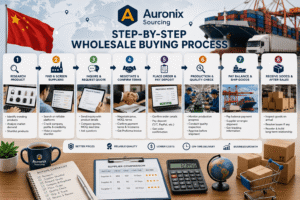
Why Buy Wholesale from China?
China remains one of the world’s leading manufacturing hubs, offering businesses access to:
- Competitive pricing
- Large production capacity
- Product customization
- Private label manufacturing
- Wide product selection
- Reliable export infrastructure
Wholesale buying enables businesses to purchase products in larger quantities while reducing the cost per unit.
Step 1: Research Your Product
The first step is selecting the right product for your market.
Consider:
- Customer demand
- Market trends
- Competition
- Target audience
- Profit margins
- Product size and shipping costs
Strong product research forms the foundation of a successful wholesale business.
Step 2: Prepare Product Specifications
Create a detailed specification sheet before contacting suppliers.
Include:
- Product dimensions
- Materials
- Colors
- Features
- Packaging requirements
- Logo placement
- Quantity
- Target price
Providing clear specifications helps suppliers prepare accurate quotations.
Step 3: Find Reliable Suppliers
Search for manufacturers through trusted sources such as:
- Alibaba
- 1688
- Made-in-China
- Global Sources
- Trade fairs
- Professional sourcing agents
Always compare multiple suppliers before making a decision.
Step 4: Verify Suppliers
Never place an order without verifying the manufacturer.
Confirm:
- Business registration
- Factory location
- Manufacturing capabilities
- Export experience
- Production capacity
- Product specialization
Supplier verification helps reduce sourcing risks and protects your investment.
Step 5: Request Quotations
Obtain quotations from several suppliers.
Compare:
- Unit price
- Minimum Order Quantity (MOQ)
- Production lead time
- Packaging
- Customization options
- Payment terms
- Shipping terms
Choosing the best overall value is more important than selecting the lowest price.
Step 6: Order Product Samples
Always evaluate samples before mass production.
Inspect:
- Material quality
- Product finish
- Functionality
- Packaging
- Branding
- Durability
Samples confirm whether the supplier can meet your expectations.
Step 7: Negotiate Pricing and Terms
Discuss key business terms before production begins.
Negotiate:
- Product pricing
- MOQ
- Payment schedule
- Production timeline
- Packaging
- Product customization
Successful negotiations create long-term partnerships that benefit both buyer and manufacturer.
Step 8: Confirm the Purchase Order
Before production starts, ensure all details are documented.
Confirm:
- Product specifications
- Quantity
- Packaging design
- Labeling
- Delivery timeline
- Payment terms
Clear documentation helps prevent misunderstandings during production.
Step 9: Monitor Production
Stay informed throughout the manufacturing process.
Monitor:
- Production progress
- Manufacturing schedule
- Packaging preparation
- Estimated completion date
- Shipment readiness
Production monitoring helps identify and resolve issues before shipment.
Step 10: Conduct Quality Inspections
Arrange a professional pre-shipment inspection before products leave the factory.
Inspectors verify:
- Product quality
- Quantity
- Packaging
- Labeling
- Workmanship
- Carton condition
Quality inspections help ensure that products meet agreed specifications.
Step 11: Arrange Shipping
Select the most suitable shipping method.
Air Freight
Best for:
- Small shipments
- Urgent orders
- High-value products
Sea Freight
Best for:
- Bulk wholesale orders
- Lower shipping costs
- Large inventory
Door-to-Door (DDP) Shipping
Ideal for businesses looking for a simplified shipping solution with logistics and customs handling managed by the shipping provider.
Step 12: Prepare Import Documentation
Ensure all required shipping documents are ready.
Common documents include:
- Commercial Invoice
- Packing List
- Bill of Lading or Air Waybill
- Certificate of Origin (when required)
- Product certifications (where applicable)
Accurate documentation helps prevent customs delays.
Step 13: Calculate Total Landed Cost
The product price is only one part of your total cost.
Include:
- Product cost
- Packaging
- Freight charges
- Customs duties
- Taxes
- Inspection fees
- Insurance (if applicable)
Understanding your landed cost helps you set profitable selling prices.
Step 14: Receive and Inspect Your Shipment
After delivery, inspect your products to ensure they match the approved samples and purchase order.
Review:
- Product quality
- Quantity
- Packaging
- Branding
- Shipping condition
Document any issues immediately so they can be addressed with the supplier if necessary.
Step 15: Build Long-Term Supplier Relationships
Reliable suppliers become valuable business partners.
Strong relationships can lead to:
- Better pricing
- Priority production
- Faster communication
- Consistent quality
- Greater flexibility
Long-term partnerships support sustainable business growth.
Common Wholesale Buying Mistakes
Many businesses encounter problems because they:
- Choose suppliers based only on price
- Skip supplier verification
- Ignore product samples
- Fail to compare quotations
- Skip quality inspections
- Underestimate shipping costs
- Fail to calculate total landed costs
Avoiding these mistakes reduces risks and improves sourcing success.
Why Work with Auronix Sourcing?
Wholesale importing involves much more than simply placing an order.
At Auronix Sourcing, we manage every stage of the wholesale buying process to help businesses import products with confidence.
Our services include:
- Product sourcing
- Supplier identification
- Supplier verification
- Factory audits
- Supplier comparison
- Price negotiation
- Product customization
- Private label manufacturing
- Sample management
- Production monitoring
- Quality inspections
- Packaging verification
- Freight coordination
- Air freight
- Sea freight
- Door-to-door logistics
Our experienced sourcing team works directly with verified Chinese manufacturers to ensure quality, reduce sourcing risks, and streamline international shipping.
Wholesale Buying Checklist
Before placing your order, confirm that you have:
- Researched your product
- Prepared product specifications
- Compared multiple suppliers
- Verified the manufacturer
- Requested product samples
- Negotiated pricing and terms
- Approved the purchase order
- Monitored production
- Conducted a quality inspection
- Chosen the right shipping method
- Calculated total landed costs
- Prepared import documentation
Completing this checklist helps ensure a successful wholesale buying experience.
Conclusion
Buying wholesale from China is an excellent opportunity for businesses looking to expand product offerings and improve profitability. However, success depends on following a structured sourcing process that includes supplier verification, product sampling, price negotiation, quality inspections, and careful logistics planning.
By taking a step-by-step approach and working with experienced sourcing professionals, businesses can reduce risks, improve product quality, and build reliable long-term supply chains.
With Auronix Sourcing as your trusted sourcing partner, you receive complete support in product sourcing, supplier verification, factory audits, private label manufacturing, quality inspections, packaging solutions, and international shipping—helping your business buy wholesale from China safely, efficiently, and with confidence.